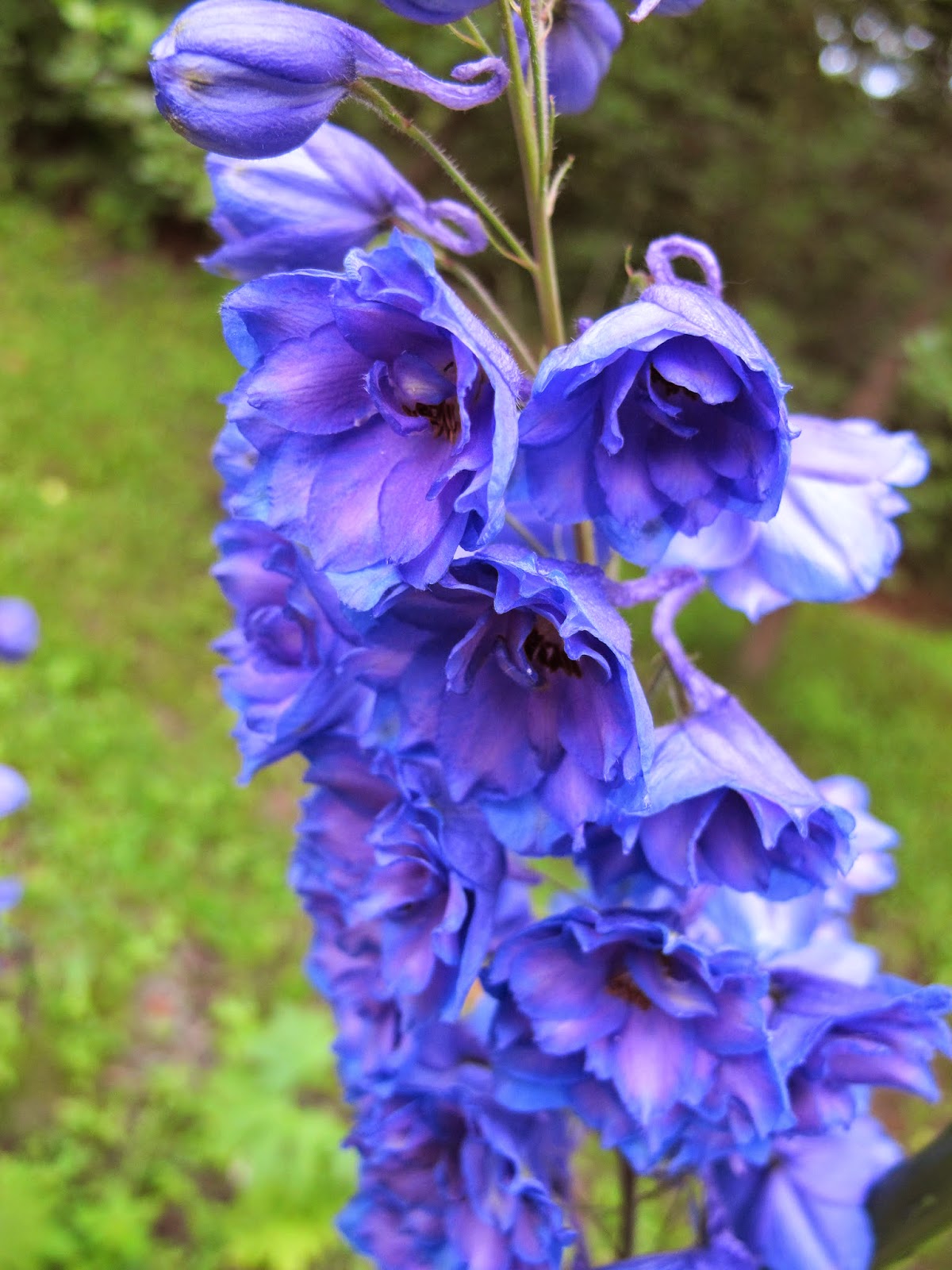
Blue is not "normal" in the plant world. Just a quick review from biology class: Plants use chlorophyll for green, carotene for yellows and oranges, and anthocyanin for reds and purples. That true blue in the sky? Well, it'll have to stay in the sky. However, plants can get close. Delphinidin is a pigment, and it shows up in violas and delphiniums. Breeders have tried for years and years to create a blue rose, so if you have some extra time on your hands, try that and earn mega bucks if you succeed. Delphiniums are touchy plants but worth the work. The tower-shaped clusters of flowers need staking, and the plants are perennials but don't last as long as other perennials, such as day lilies. Yet the wow factor is worth it!
Friday, February 20, 2015
Friday, February 13, 2015
Countdown to Spring: Violets
In the late 1800s in England, violets were the flowers to give. What's not to love? They're pretty and fragrant. The flowers are edible and perhaps contain medicinal value (more study is needed). Viola covers a lot of wild and cultivated varieties, including pansies and johnny-jump-ups, but I let the wild ones take over my lawn. In suburban lawns, these delicate-looking yet hardy flowers are considered weeds, but, as I mentioned in my last post, I grow weeds for bees. The photo below is one particularly fabulous year for violets in my lawn.
I wish someone would invent scratch and sniff for screens!
Friday, February 6, 2015
Countdown to Spring: Daisy
My wedding bouquet featured daisies. The florist was appalled and pushed me to choose roses instead, but I insisted. I love them. I've tried to grow Shasta daisies, but the plants didn't last. And the Shasta daisy flowers needed staking. The ones pictured here are ox eye daisies or field daisies. Farmers and ranchers will be appalled by what I write here--I let them grow wild in my lawn. I stole this idea from an artist whose lawn is covered in daisies in the spring. Why the controversy? The flowers are considered a weed because they are non-native and spread in native habitat. (This is a good reason to keep them in check, which I do. I grow them only in the cultivated part of my yard.) And cattle will not graze in daisy fields due to the bad taste. However, they are beloved by pollinators of all sorts. Due to the recent upsurge of bee deaths, I try to encourage plants that provide food. I grow weeds for bees! To prove I'm not a hypocrite, I let dandelions grow in my lawn, too. And clover. It's a good thing I don't live in a cookie-cutter community of emerald green lawns, or I'd be in trouble.
Here's what they look like in the lawn.
Pollinators love them!
Friday, January 30, 2015
Countdown to Spring: Cosmos
Every week I say that this week my choice for Countdown to Spring is my favorite, but cosmos rank high on that list. The crisp colors, the deceptively delicate flowers, and the feathery foliage are beautiful, but they are easy to grow and attractive to wildlife. They look best grown in a group or cluster. With so many varieties to choose from, gardeners can find one they like.
Spiders like cosmos.
Dragonflies like them.
Bees like them.
Ants like them, too. I wish I had a photo of hummingbirds near the flowers, but they're too quick.
Friday, January 23, 2015
Countdown to Spring: Squill
"Squill" sounds like a fish instead of a
flower. The official name is Scilla
sibirica or Siberian squill. Gardeners
will call this bulb scilla, a more dignified name, I suppose. It's one of the flowers in nature that looks blue. Planted in the fall, the
bulbs bloom in early spring before the trees have leaves. I've got them planted in my lawn with the
hope that they'll spread a little more
every year. When the flowers die down, the foliage gathers energy for the next
year, so I mow around them until the leaves have yellowed. The photo below is
to show how small they are, but so worth it! After a long winter, I welcome
their cheery brightness.
Friday, January 16, 2015
Countdown to Spring: Daffodils
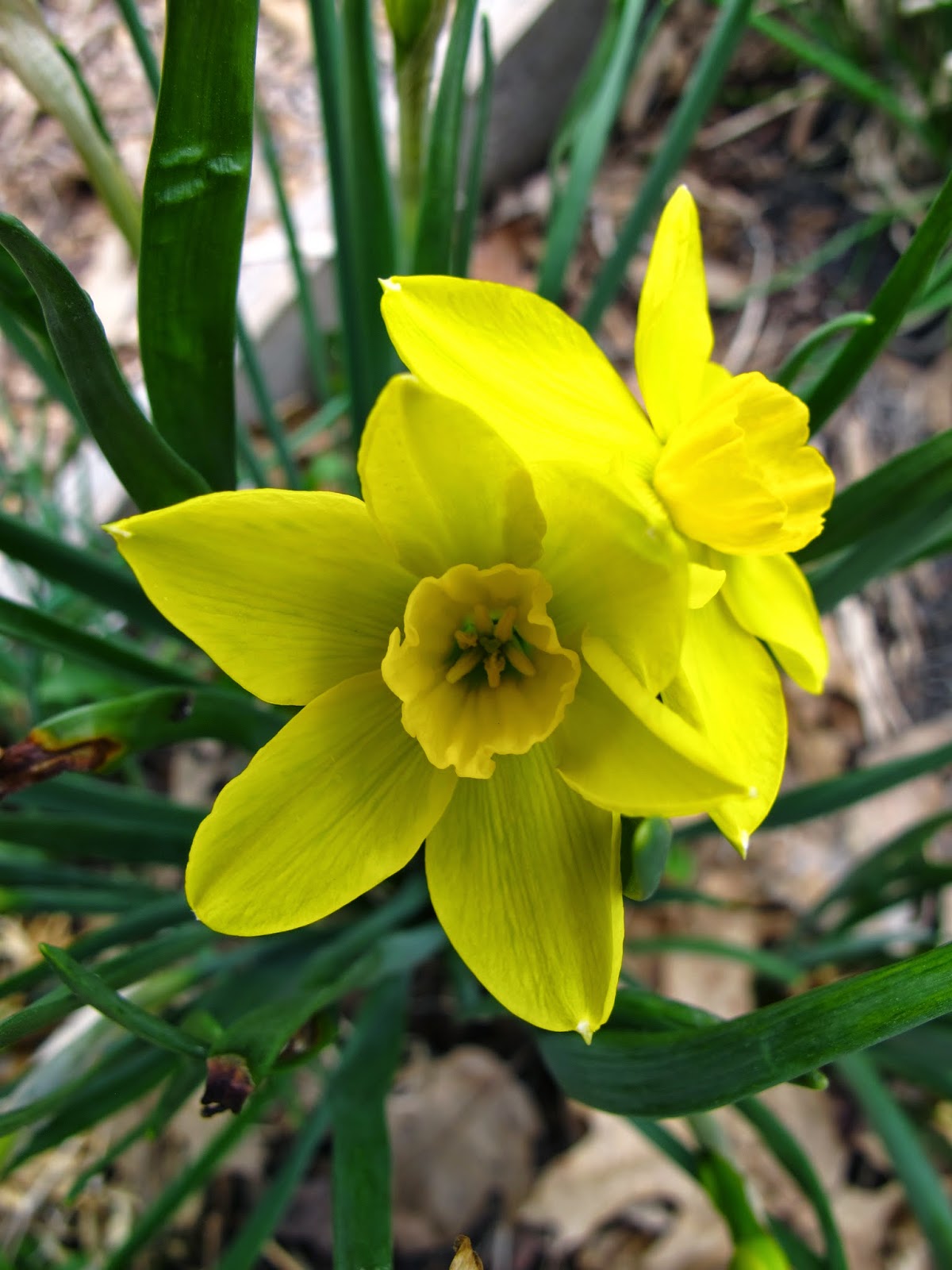
Mice? Squirrels? Deer? No problem! Snow? Cold? No problem! These amazing daffodils (otherwise known as Narcissus) stand up to whatever Minnesota throws at them. The earliest they've ever bloomed for me in Minnesota is April, but gardeners in warmer climates may see them flower earlier. (Perhaps January in Texas... can it be true?) Planted in the fall, daffodils come in a range of sizes and levels of frilliness. The colors range from white and yellow to pink and apricot. The ones above have a delicate flower, but an amazing fragrance and they open later than the white ones below. I'm sorry that I can't give the variety names; one I planted immediately when I moved here and lost the tags. The other was a gift from a gardener when I was a new homeowner. I try to continue the tradition by dividing these daffodils to give as housewarming gifts. Moving in? Let me know and I'll give you some. But you'll have to wait until the ground thaws.
Friday, January 9, 2015
Countdown to Spring: Daylilies
Daylilies, named for the blooms that last for one day, are my new favorite perennial. I used to stay away from them because my grandmother had some daylilies planted around the foundation of her house. The plants had to be nearly as old as the house; they grew too well, overtaking any other plants nearby. Once the flowers were done, the leaves were tall and scraggly. They were orange, which I never minded, but at one time orange was considered unfashionable. (I've never understood this philosophy of colors coming in and out of vogue--I just love color!) But now daylilies are bred to stay in one place. And they come in a wide range of colors, from pale yellow to mauve to rose, and--of course--orange. Eventually I broke down and planted those old fashioned orange daylilies, and they bloom in the hottest part of summer, holding up to the blazing sun with their bright colors and strong constitutions. Daylilies will need dividing eventually; you'll know because the flowers won't bloom as profusely. Reliable. Hearty. Colorful. Daylilies are the perfect Minnesota beauties for every garden.
Subscribe to:
Posts (Atom)