It's one week until spring! Not here in Minnesota but somewhere else (Indiana, perhaps, in zone 6 or thereabouts), these fall-planted beauties are blooming. I love them, but so do the mice and voles. This year I've observed more vole tracks than usual, which makes me wonder if I'll have any crocus blooms this year. I've read the advice to plant the bulbs inside chicken wire, but I dig in the dirt and I don't feel like scraping my hand on dirty wire. What I do instead is sprinkle the bulbs with cayenne pepper powder when I plant them. Of course, winter happens (lots of snow and ice and wind). It's a gamble, but one I'm willing to take.
Friday, March 13, 2015
Friday, March 6, 2015
Countdown to Spring: Forget-me-not
Forget-me-nots are often planted with tulips. The tall spikes of the tulip flowers pair nicely with the ground cover aspects of forget-me-nots. However, what's important about this blog entry today isn't this flower so much but its name. This winter has been brutal. I write this on a below zero morning, days after snow was found in every state except Florida. Here's my message: Spring says, "Forget me not!" This little flower reminds us that temperatures will rise, snow will melt, and flowers will awaken.
Friday, February 27, 2015
Countdown to Spring: Lilacs
Lilacs are the coffeehouses of flowers. I stand beneath the branches and breathe deeply, practically tasting the scent, memorizing it since I won't experience for another year. Perfumes and colognes cannot recapture this fragrance. It's not only the scent that makes them a coffee house, but that the lilac becomes a gathering place, where butterflies come to eat and dragonflies come to meet. From the camouflage of its branches, I hide with my camera. I witnessed a butterfly...
a dragonfly...
and the elusive hummingbird.
Friday, February 20, 2015
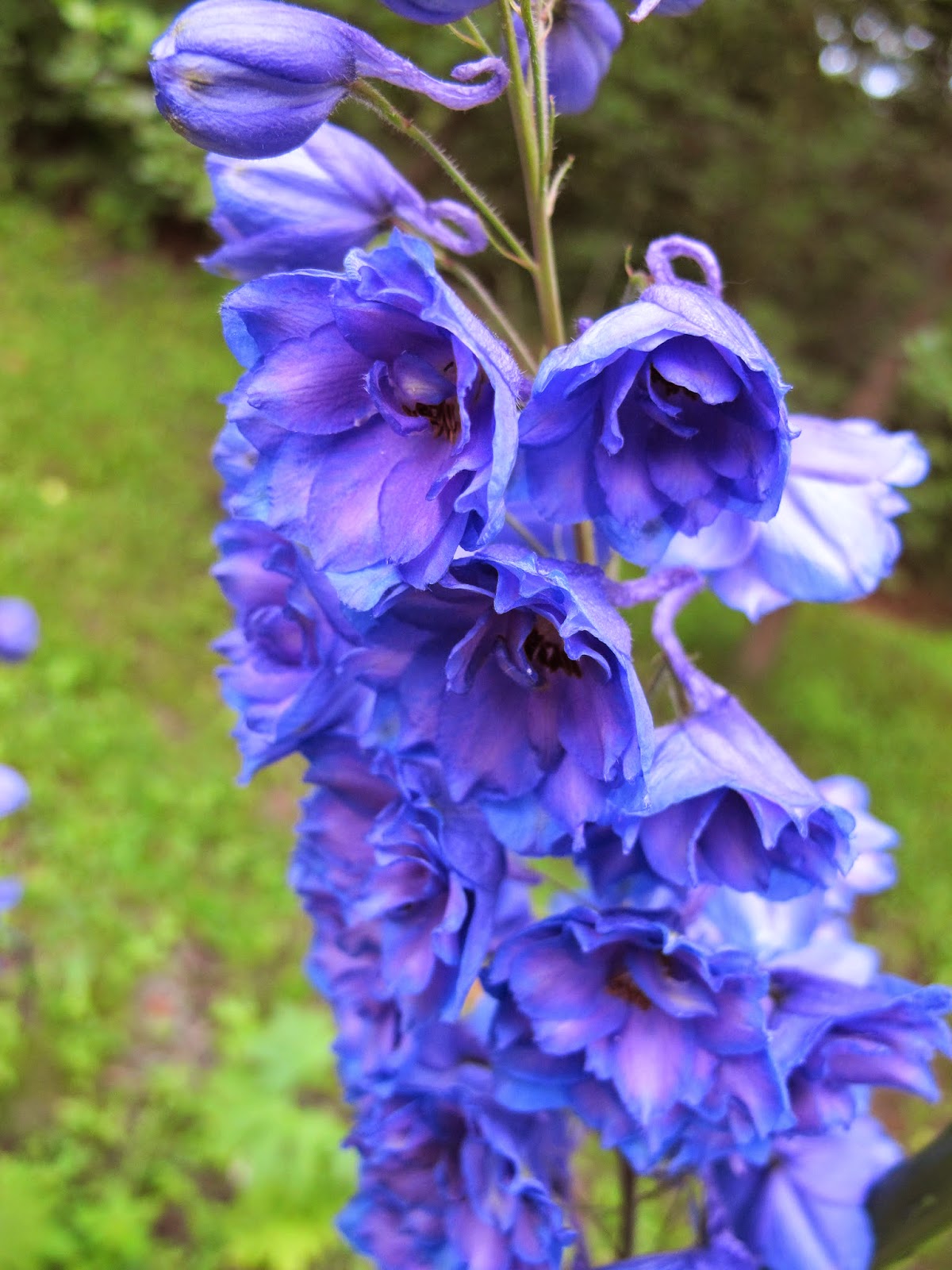
Countdown to Spring: Delphinium
Blue is not "normal" in the plant world. Just a quick review from biology class: Plants use chlorophyll for green, carotene for yellows and oranges, and anthocyanin for reds and purples. That true blue in the sky? Well, it'll have to stay in the sky. However, plants can get close. Delphinidin is a pigment, and it shows up in violas and delphiniums. Breeders have tried for years and years to create a blue rose, so if you have some extra time on your hands, try that and earn mega bucks if you succeed. Delphiniums are touchy plants but worth the work. The tower-shaped clusters of flowers need staking, and the plants are perennials but don't last as long as other perennials, such as day lilies. Yet the wow factor is worth it!
Friday, February 13, 2015
Countdown to Spring: Violets
In the late 1800s in England, violets were the flowers to give. What's not to love? They're pretty and fragrant. The flowers are edible and perhaps contain medicinal value (more study is needed). Viola covers a lot of wild and cultivated varieties, including pansies and johnny-jump-ups, but I let the wild ones take over my lawn. In suburban lawns, these delicate-looking yet hardy flowers are considered weeds, but, as I mentioned in my last post, I grow weeds for bees. The photo below is one particularly fabulous year for violets in my lawn.
I wish someone would invent scratch and sniff for screens!
Friday, February 6, 2015
Countdown to Spring: Daisy
My wedding bouquet featured daisies. The florist was appalled and pushed me to choose roses instead, but I insisted. I love them. I've tried to grow Shasta daisies, but the plants didn't last. And the Shasta daisy flowers needed staking. The ones pictured here are ox eye daisies or field daisies. Farmers and ranchers will be appalled by what I write here--I let them grow wild in my lawn. I stole this idea from an artist whose lawn is covered in daisies in the spring. Why the controversy? The flowers are considered a weed because they are non-native and spread in native habitat. (This is a good reason to keep them in check, which I do. I grow them only in the cultivated part of my yard.) And cattle will not graze in daisy fields due to the bad taste. However, they are beloved by pollinators of all sorts. Due to the recent upsurge of bee deaths, I try to encourage plants that provide food. I grow weeds for bees! To prove I'm not a hypocrite, I let dandelions grow in my lawn, too. And clover. It's a good thing I don't live in a cookie-cutter community of emerald green lawns, or I'd be in trouble.
Here's what they look like in the lawn.
Pollinators love them!
Friday, January 30, 2015
Countdown to Spring: Cosmos
Every week I say that this week my choice for Countdown to Spring is my favorite, but cosmos rank high on that list. The crisp colors, the deceptively delicate flowers, and the feathery foliage are beautiful, but they are easy to grow and attractive to wildlife. They look best grown in a group or cluster. With so many varieties to choose from, gardeners can find one they like.
Spiders like cosmos.
Dragonflies like them.
Bees like them.
Ants like them, too. I wish I had a photo of hummingbirds near the flowers, but they're too quick.
Subscribe to:
Posts (Atom)